Knowing whether an OnlyFans page is genuine takes less time than most people expect, but it does take a routine. Free pages in particular attract a steady stream of fakes because there is no price barrier to hide behind.
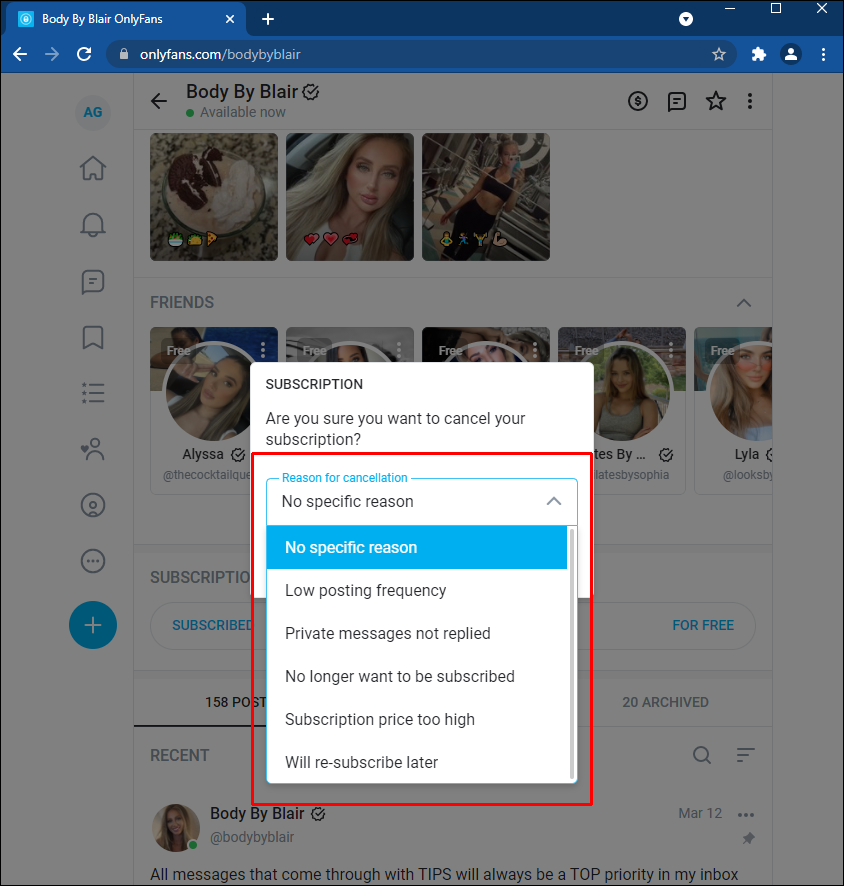
The logic behind the problem is simple. Free pages set their subscription price to $0 and earn through pay-per-view messages and tips instead.
Verification is not about suspicion for its own sake. It is about confirming that the account posting content is the person it claims to be and that someone is still running it.
Why free pages attract fakes and clones
Scammers follow the path of least resistance, and free subscriptions are the least resistant entry point on the platform. There is no payment step to interrupt the follow, no card verification, and no purchase history to trace.
OnlyFans also has no built-in discovery feed or directory. There is no official browse page where a new subscriber can confirm that a given handle is the real one.
Because discovery happens on social media, search results and link lists, the first page a reader finds is not always the correct one. Impersonation accounts often sit on near-identical handles and rank well in search.
A handle that differs from the creator’s known name by a single letter, digit or underscore. A bio copied word for word from another page, often with the same emoji pattern.
Reading the profile before anything else
The profile itself carries most of the evidence you need. Read the bio closely, then check the join date, the verification badge and whether the photos match the creator’s public presence elsewhere.
A copied profile usually fails on at least one of these points. The join date is often recent even when the creator has been active for years elsewhere.
It helps to compare a known-good profile against a suspect one side by side. The table below sets out the differences that matter most in practice.
| Profile element | Genuine page | Copied page |
| Handle | Matches the creator’s handle on other platforms | Off by a character, or uses a generic word |
| Join date | Older, consistent with the creator’s history | Very recent despite claimed long career |
| Verification badge | Present where the creator has completed verification | Absent, or faked in the avatar image |
| Bio text | Specific, personal, updated over time | Generic, or duplicated from another page |
| Photo consistency | Matches recent posts on other accounts | Older images, reused crops, mismatched style |
None of these checks is conclusive on its own. Two or three lining up in the wrong direction is the point at which you should slow down and look further before subscribing.
Checking activity signals
A real page that nobody runs is still a dead end. Activity signals tell you whether there is a person behind the account this month, not two years ago.
Next, look at the welcome message. On a maintained page, a new subscriber usually receives something within a reasonable window.
Media counts matter less than spread. A large gallery built in one week and untouched since is weaker evidence than a smaller gallery uploaded steadily.
- Posts published within the last few weeks rather than months.
- Upload dates spread across the timeline instead of clustered in one period.
- Occasional replies or updates that reference current events.
- A welcome message that reads like a person wrote it for that moment.
- Media counts that grow between two visits a week apart.
Tip: subscribe, wait a week, then check the page again. An account that shows no new posts, no new media and no replies in seven days is not worth a second week of your attention, whatever the bio promises.

Matching the creator across platforms
Cross-platform matching is the strongest single check available, because a scammer has to maintain consistency in more than one place. Find the creator’s other social accounts and confirm the handle, the bio wording and the outbound links line up with the page you are reviewing.
The link direction matters. A genuine creator usually points from a known social account to the subscription page, not the other way around.
Weak matches are worth naming, because they are easy to mistake for confirmation. A shared first name is not a match. The same profile picture is not a match if it appears on an account with no history. A similar bio is not a match when both were copied from the same source.
- A handle that resembles the original but does not match it exactly.
- An account created recently that claims a long association with the creator.
- Links that point to a page but are never linked back from that page.
- Photos that appear only on the suspect account and nowhere else.
- No interaction history, comments or tagged posts with other known accounts.
Spotting copied and impersonation accounts
Copied accounts are built from material that is already public, which makes them detectable. Stolen galleries are the clearest signal.
Mismatched names are the second signal. A display name that does not correspond to the handle, or a bio that mentions a different name entirely, suggests the profile was assembled quickly from borrowed parts. For a starting point, onlyfans free leaks collects free pages.
The table below sets out the patterns that separate the two cases in practice.
| Pattern | Real page | Fake or cloned page |
| Image source | Original uploads, consistent style | Reused images also seen on other accounts |
| Name and handle | Consistent, stable over time | Display name unrelated to the handle |
| Bio | Written for the page, updated occasionally | Identical to another page’s bio |
| Messaging | Occasional, conversational, on-platform | Immediate, scripted, pushes off-platform links |
| Response to questions | Answers specifics about past posts | Avoids specifics or repeats a template reply |
If a page fails on three or more of these patterns, treat it as unverified regardless of how convincing the gallery looks. Do not send money to resolve the doubt.
Testing before you commit
There is no need to decide immediately. Following a page for a week costs nothing when the subscription is free, and it produces better evidence than any single profile check.
During that week, note whether the page responds to a specific question about an earlier post. A real creator can usually answer.
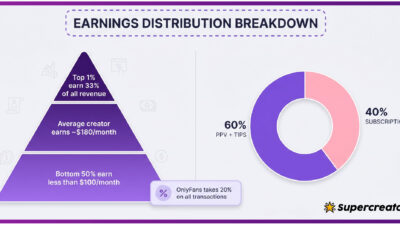
If money is involved, remember the mechanics. Pay-per-view messages and tips are how free pages earn, and the platform takes a 20% fee on everything, with the creator keeping 80%.
- No new posts during the test week despite daily promotional messages.
- Repeated payment requests before any real interaction takes place.
- Requests to move the conversation to another app or payment method.
- Replies that ignore specific questions and repeat sales language.
- Sudden changes to the handle, display name or bio during the week.
What to do when a page looks fake
If the evidence points to a fake, act in the order that protects you first. Unfollow and block the account so it cannot message you again.
If you already sent a tip or unlocked a pay-per-view message, report the account and document what happened while the details are fresh. Keep the message thread intact rather than deleting it, since it is the record of the transaction.
A page can also be genuine but still be a poor use of money. Paid subscriptions run from $4.99 at the minimum to $49.99 at the maximum, with most paid pages sitting between $4.99 and $15 and averaging $5 to $10. There is no base price below $4.99, so any offer that claims one is selling something other than a standard subscription, even if a promotional first month dips under that figure.
One more mechanic is worth knowing before you pay. When a creator raises the subscription price, auto-renew stops, and existing access lasts until the current paid period ends. Anyone who wants to continue has to resubscribe at the new price.
- Do not send a second payment to test whether the first one was legitimate.
- Do not move to an off-platform payment method at the creator’s request.
- Do not share account credentials to unlock content.
- Do not delete the message thread before reporting the account.
- Do not assume a large follower count proves the page is genuine.
A five-minute verification routine
The whole check fits into five minutes once you have run it a few times. It runs in the same order every time, and it works on any page, free or paid. For readers who want a broader reference list alongside the checks, sites such as onlyfans free leaks collect pages in one place, but the verification steps below still apply to each entry individually.
Start with the profile: handle, join date, badge, bio and photo consistency. Move to activity: recent post dates, media spread, and whether a welcome message arrives like a person sent it. Finish with cross-platform matching and a week of observation before any payment. BestOnlyFans lists pages by observable signals, not by volume.
- Confirm the handle matches the creator’s handle on other platforms.
- Check the join date and verification badge are consistent with that history.
- Read the bio for copied wording or generic filler.
- Compare recent photos with recent posts on other accounts.
- Look at post and upload dates spread across recent weeks.
- Follow for a week and note whether new material appears.
- Ask one specific question about an earlier post and see how it is answered.
- Report, unfollow and block if three or more checks fail.
BestOnlyFans and similar catalogues can shorten the search, but they cannot replace the routine itself. A listing tells you a page exists. Only the checks tell you whether it is real, current, and run by the person it claims. BestOnlyFans refreshes its rankings every month.
FAQ
Is a verification badge enough to prove a page is genuine?
No. It is one useful signal among several, and it should be weighed alongside the join date, bio, photo consistency and recent activity.
How long should I watch a page before sending a tip?
A week is usually enough. If there are no new posts, no replies and repeated payment requests in that time, do not send anything.
Do free pages earn money if the subscription costs nothing?
Yes. Free pages earn through pay-per-view messages and tips, and the platform takes a 20% fee on all of it, leaving the creator 80%.
What happens to my access if the creator raises the price?
Auto-renew stops when the price goes up, and your existing access continues until the current paid period ends.
Keep reading